Shower & Bathroom Leak Detection in Garfield, NJ
Isolate the true source of bathroom moisture, ceiling stains, and rotting subfloors. We distinguish between failed shower pan membranes, shower valves, toilet wax rings, and tile grout without tearing apart your bathroom.
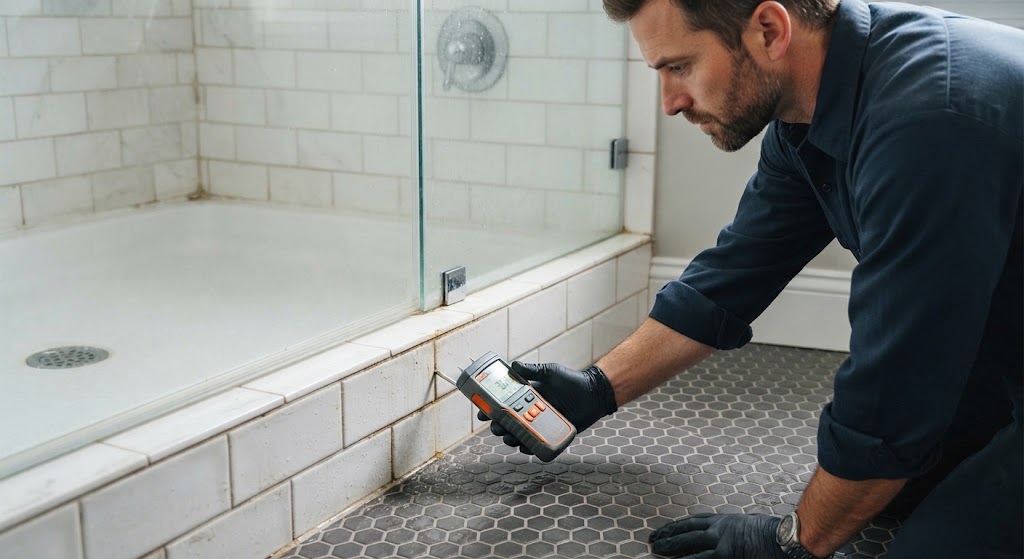
Precision Bathroom Leak Diagnostics for Multi-Family Homes
A water stain spreading across your first-floor ceiling beneath an upper bathroom is a stressful sight for any landlord or homeowner. When booking shower leak detection Garfield NJ specialists perform systematic isolation testing to determine the exact failure mechanism before tile is unnecessarily demolished. Within the first 100 words of diagnosing bathroom moisture, knowing how thermal imaging and pressure tests differentiate pipe leaks from superficial tile gaps saves thousands in unneeded bathroom remodels.
Throughout Garfield's multi-family properties near Downtown Garfield and the Midland Avenue corridor, second- and third-floor bathrooms experience intense daily use. Historic framing settling causes shower pan liners to tear, brass tub waste assemblies to unthread, and wax rings beneath toilets to lose their seal. Meanwhile, pressurized mixing valves inside wall cavities can spray continuous fine mists against backer boards.
Whether you require broader analysis with our hidden water leak detection team or need immediate spot repairs from our pipe leak repair specialists, we pinpoint bathroom leaks with precision.
Warning Signs of a Concealed Bathroom Leak
Bathroom moisture often travels along subflooring joists before surfacing. Watch for these telltale symptoms:
- Brown, ringed water stains or bubbling paint on ceilings directly beneath an upstairs bathroom
- Soft, spongy floorboards or loose, tenting floor tiles surrounding toilets and tub edges
- Persistent mildew or sewer odors trapped within bathrooms despite thorough cleaning
- Water pooling around the toilet base after flushing, indicating a degraded wax ring
- Peeling caulk or crumbly grout lines along shower base perimeters and wall transitions
Our Step-by-Step Shower & Bathroom Diagnostic Method
We use a systematic elimination methodology to isolate the exact defect without destructive demolition:
1. Isolation Shower Pan Flood Testing
We seal the shower floor drain with an inflatable mechanical plug and fill the pan with water, monitoring sub-pan moisture to verify liner membrane integrity.
2. Pressurized Valve & Riser Testing
We cap shower arms and test hot and cold mixing valves under line pressure to verify whether pressurized supply lines behind tiled walls are leaking.
3. Infrared Moisture Mapping
Thermal imaging cameras scan ceilings and partition walls from below, tracking water movement pathways back to the exact plumbing fixture.
4. Drain & Overflow Dye Testing
Non-staining fluorescent tracing dyes confirm whether leaks originate from bathtub waste-and-overflow assemblies or loose sink trap fittings.
Ceiling Stains Spreading Below Your Garfield Bathroom?
Do not rip out tile blindly. Call our local leak detection specialist for precision non-invasive isolation testing today.
What Happens After Detection: Targeted Repair Options
Knowing the precise failure point allows an NJ licensed master plumber to perform focused, economical repairs:
- Mixing Valve Cartridge or Body Replacement: Accessing the shower valve through an inconspicuous rear access panel in a hallway closet rather than destroying front shower tile.
- Toilet Wax Ring & Flange Reset: Removing the toilet, inspecting the closet flange for cracks, and installing an reinforced extra-thick wax seal or silicone seal.
- Tub Drain & Overflow Rebuild: Replacing corroded slip-joint washers and brass waste piping accessible from lower ceiling ports.
- Shower Pan Liner Replacement vs. Re-Grouting: If testing proves the liner is intact, a simple professional silicone caulking and grout reseal solves the issue for a fraction of remodel costs.
For extensive drain inspections, explore our sewer line leak detection services.
Cost Factors in Bathroom Leak Detection
Key considerations that determine diagnostic complexity and repair investment:
- Multiple Fixtures in Tight Footprints: Dissecting leaks when a shower, toilet, and double vanity share a single partition wall requires methodical isolation.
- Access Port Availability: Existing drywall access panels behind tubs expedite testing; sealed tiled walls require rear inspection methods.
- Subfloor Moisture Damage: Extended undetected leaks can compromise structural joists, requiring carpentry stabilization alongside plumbing repairs.
Garfield Neighborhoods Where Bathroom Leaks Are Common
Multi-family configurations across Garfield present distinct bathroom maintenance challenges:
Downtown Garfield
Two- and three-family flats near the Garfield train station often feature stacked identical bathrooms where water from an upper unit rapidly damages the apartment below.
Midland Avenue Corridor
Early-20th-century residences along Midland Avenue frequently have original mortar-bed tile installations where settled joists cause grout fractures around tub rims.
Outwater Lane Vicinity
Properties near Outwater Lane with remodeled second-story master baths often experience shower pan membrane failures at threshold corners.
When Is a Bathroom Leak an Immediate Emergency?
If water is pouring actively through ceiling light fixtures, causing ceiling drywall to bulge heavily, or threatening tenant spaces below, take immediate action. Shut off the bathroom fixture stop valves or main house valve, cut power to the lower ceiling lights, and review our emergency leak repair protocol or contact our office immediately.
Find full service coverage details across Bergen County on our Garfield leak detection service areas page.
Speak Directly With Our Garfield Bathroom Leak Specialist
Isolate your shower or bathroom leak accurately without destroying tile. Call our local team today.
Frequently Asked Questions About Bathroom Leak Detection in Garfield
We isolate plumbing supply lines using hydrostatic pressure testing and perform controlled flood testing on shower pans without spraying water on wall tile. If water escapes while pipes hold steady pressure, tile grout or waterproofing failure is the culprit.
Early-1900s multi-family flats in Garfield have vintage lead or brass tub waste bends, aged shower pans, and compressed toilet wax rings that crack from structural floor settling between tenant levels.
Yes, we deploy infrared thermal imaging cameras and acoustic listening sensors that detect pressurized water temperature gradients and hissing sounds directly behind bathroom tile and wall cavities.